Apple today announced the iPhone 3G — a tri-band phone that will operate in most countries around the world. So it’s no surprise that Apple wants to sell the iPhone in as many of these countries as quickly as possible.
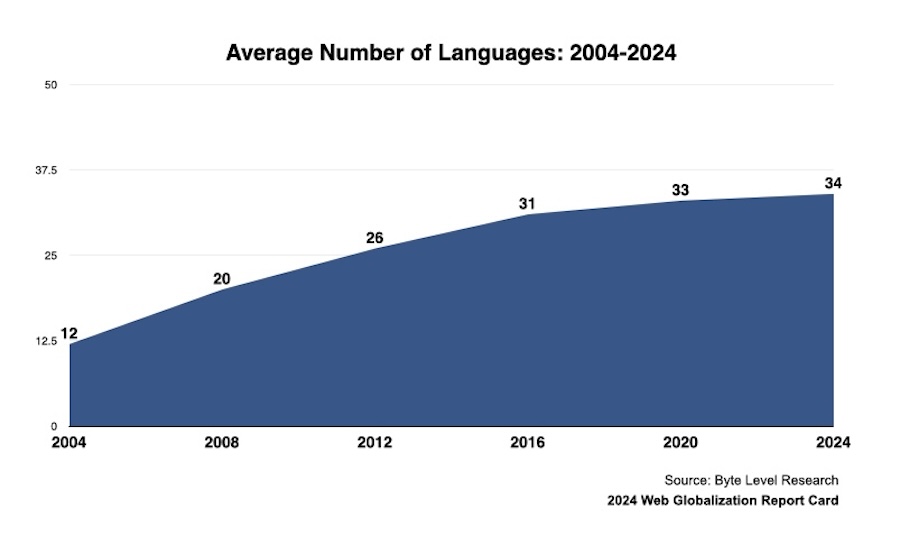
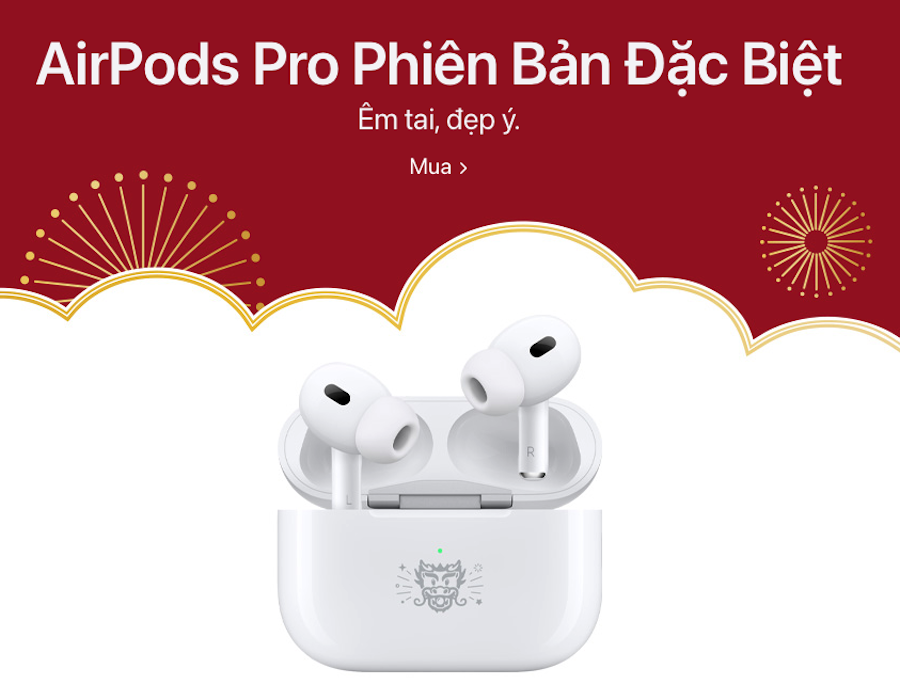
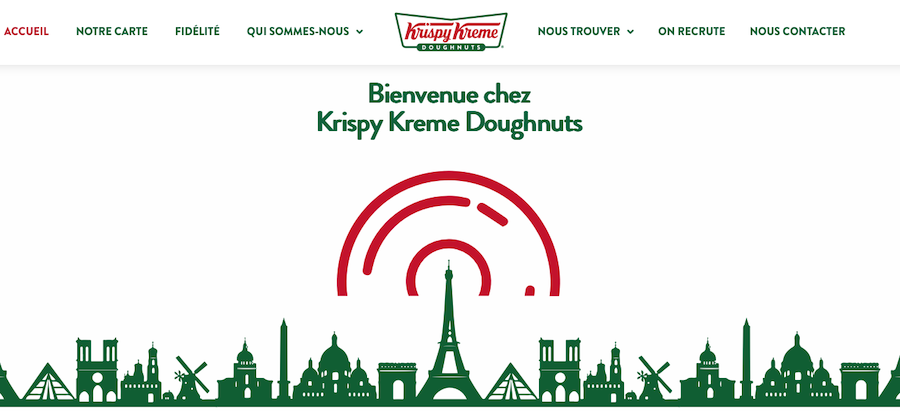
Fortunately, Apple supports a consistent design across its many country Web sites. So when it came time to go live with the translated Web content on 22+ local websites, the process was a relative breeze. Here are four country home pages:

Imagine how difficult this undertaking would be if each country had it own unique Web design requiring the redesigning of visuals for each site.
When it comes to global rollouts, it’s hard to argue with the efficiency of using a global template.
A globally consistent product requires a globally consistent Web site.
Having said this, Apple could still improve a great deal when it comes to Web localization. That is, a number of the local Web sites really aren’t all that local. Like this clip, from the Japan site — an A/V demo of the new MobileMe service — which is available in English only.

Tags: Apple · Web Globalization · iPhone
I tried to login to Google Adwords recently and was met with the following “temporarily unavailable” Web page:

The page illustrates one of the many the challenges of managing a Web site that supports so many languages. Even something supposedly as simple as this temporary page is not quite so simple. There are a whopping 17 languages on this page — from Chinese to German to Japanese.
Google generally does a very good job of “guessing” the Web user’s language through a combination of geolocation and browser language detection — and then providing users with their matching language. But in this case Google simply slapped up a “one-size-fits-most” Web page — which is a lot of visual noise.
And even with 17 languages, the page comes up a bit short in serving all Adwords users — as Google Adwords supports more than 35 languages.
What’s the lesson here? That when it comes to Web globalization, no detail is too small — including those details such as error strings, 404 pages, and “temporarily unavailable” pages.
Tags: China · Events · Google · Software Localization · US Hispanic Market · Web Globalization
McAfee has released a report that rates the world’s top level domains in terms of overall risk to the Web user — from browser exploits, phishing Web sites, excessive pop-ups, and other nasty things.
The report finds that “19.2% of all Web sites ending in the .hk domain pose a security threat to Web users.” Last year, Tokelau ( .tk) was the most dangerous ccTLD, at 10.1 percent.
Here are the five most dangerous domains:
Hong Kong (.hk)
PR of China (.cn)
Philippines (.ph)
Romania (.ro)
Russia (.ru)
And here are the five safest domains:
Finland (.fi)
Japan (.jp)
Norway (.no)
Slovenia (.si)
Colombia (.co)
It’s interesting to note that Asia includes both the safest domains and the most dangerous domains.
And I wonder if this report will help spur governments and their registries to be more aggressive in policing their local Web sites.
Advertisement: Track all of the world’s ccTLDs with the Country Codes of the World map.
Tags: Domain names
Jane McConnell of NetStrategy/JMC is working on the third annual edition of the Global Intranet & Portal Strategies Survey and she needs your input.
If you are not familiar with the survey, you can read some key observations from 2007 on JMC’s blog Globally Local: 2007 Highlights. All survey participants receive a free copy of the Global Intranet Trends report. (Table of contents from 2007).
The 2008 survey will investigate new topics such as internal social networking and more details on 2.0 applications. Continuing issues such as the single point of access, ROI, overall positioning of the intranet in the organization, and many other points will also be covered.
Organizations are asked to sign up in advance. All you need to do is send an email (using your professional email address) to jane@netjmc.com specifying your name, title or role on the intranet, your organization’s name, number of employees, and the URL of your public web site. You will find more information on the Signup information page on the NetStrategy/JMC web.
As a participant, you have the opportunity to contribute to the topics and questions for 2008. After you sign up, you will receive a link to a 5-minute Quick Poll inviting you to give feedback on what is the most relevant for you at this point in time and to suggest specific topics and questions if you wish. The Quick Poll will be open until June 6th. The survey itself will take place between end June and mid August.
Tags: Web Globalization
Posted on June 1st, 2008 by Jason Yu
Jason is a partner at LingoSavvy and is based in Los Angeles. He holds a bachelor's degree in Journalism and Communication from Zhejiang University, China, as well as a master's degree in Communication Management from the USC Annenberg School for Communication.
As John wrote awhile back: All lucky numbers are local.
And this is particularly true in China, where people pay thousands of dollars to obtain license plates with lucky numbers.
So when it comes to naming products or setting prices, you have to be very careful about your choice of numbers. Here are some tips:
6 means “good fortune.”
8 means “abundance of wealth” or “make lots of money.”
The number 8 is a very lucky number, and the reason why China chose August 8th, 2008 to kick off Olympics Games. Vehicle license plates and cellphone numbers containing 6 or 8 are coveted and often auctioned to the highest bidder. A recent example: A C88888 vehicle license was auctioned in Guangdong where it sold for RMB800,000 (around USD113,000). The new owner hopes this license number helps bring good fortune — though presumably the owner was already fortunate enough to have the money to spend on the license plate.
9 means “forever.”
If a boy wants to buy a rose for his girlfriend, he will typically buy 9 roses. If he wants to splurge, he’ll buy 19 roses — and if he’s affluent, he’ll buy 99 roses. September 9th is Senior People Day in China, to ensure that th elderly live a healthy and long life.
4 is pronounced the same as “dead.”
13 means crazy, abnormal.
If a Chinese person says “you are 13″, it means “you are insane!” Some buildings, like in the US, avoid having a 13th floor. Instead, they use floor 12B. And although the pronunciation of 4 sounds like “dead,” there is a positive way to portray the number: In a musical scale, 4 is equialent to “fa,” which is pronounced closely to “make money” in Chinese. My old phone number contains “5854″ and my Chinese friends say it is a great number because it means “I make money and then I make money again.” I am happy to hear their comments.
51 in Chinese is pronounces like “I (5) wanna (1).”
You’ll find a lot of businesses and Websites using 51 in their names. 51job is the largest online human resources company. So you can tell a lot about a company simply by the numbers it uses in its domain name. Since 1 sounds like “wanna,” the number 18 is also popular as “wanna make money” and many people will choose the 18th of the month as a new business opening date or a wedding date.
Even numbers > odd numbers
Chinese people like to use even numbers rather than odd numbers because even number are related to the concept of “pairs” which usually means “perfect” in Chinese culture.
With regards to business, if a company produces different versions of products, expect them to produce 6, 8, or 12, 36 different versions. And you can always find prices like 88.00, 128.00; 156.00 in China’s shopping malls.
Tags: Business globalization · China · Culture · Translation
Here are some more localized Chinese Web sites that have gone black:
McDonald’s

Cisco

Intel

Oracle

Tags: China · Web Globalization