Web Globalization Reaches the Top: Cisco’s CGO

As early as 2000, people like me have been saying that it would be just a matter of time before corporations added a Chief Globalization Officer to their ranks. It was an easy prediction to make, but the timing was the big question mark.

That time appears to be now.

Late last year, Cisco appointed Wim Elfink as the company’s (and America’s) first CGO. Wim will be based out of India and will manage the company’s new Globalization Center East. Wim was previously VP of Customer Advocacy, which is a clear sign that this position is as much about serving customers around the world as it is about development of global products and services.

Growing pains are to be expected, particularly as territory lines are redrawn between the CMO and CIO. But these are details. The big picture has been drawn, and it now includes a CGO.

The CGO is much more than a symbolic gesture. It is a sign of a company that understands that successful globalization begins at the top.

Cisco may the be the first to see the importance of a CGO; it certainly will not be the last.

PS: Here’s a recent AP article on Cisco’s CGO and what it will mean to other companies.

English, Chinese, and Hindi?

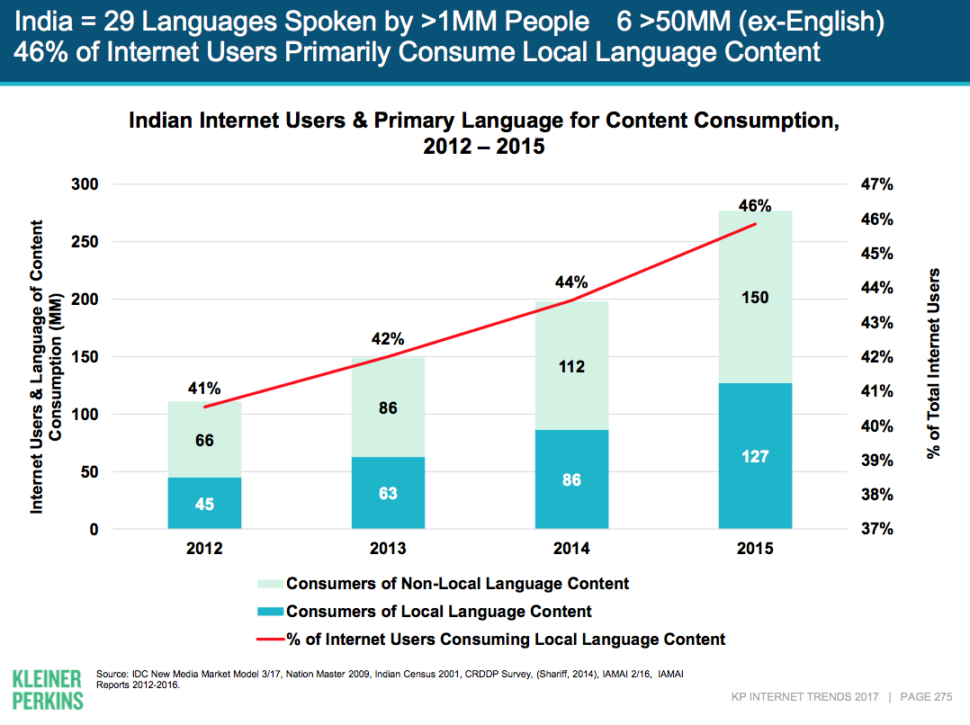
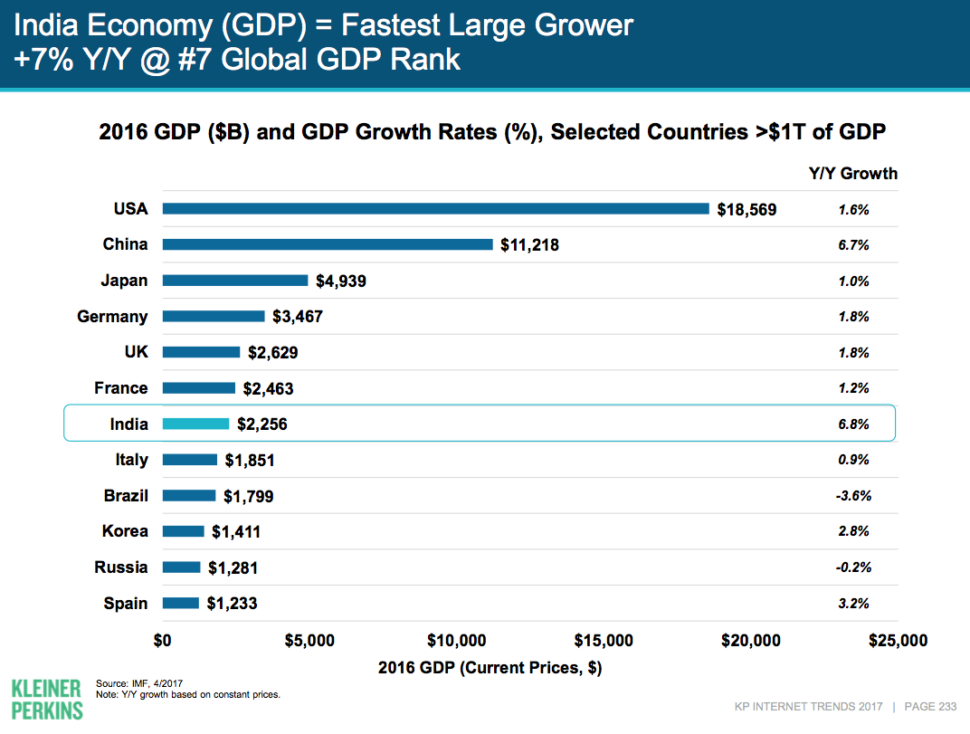
According to Silicon India Google CE Eric Schmidt says India will become the world’s biggest Internet market in 5 to 10 years. Says the article, “Schmidt’s other futurist view is that Hindi, not Hispanic, could become one of the world’s three Internet languages, in conjunction with English and Chinese.”

Given that Hindi was represented on just a handful of the 300 global Web sites we reviewed for the 2006 Web Globalization Report Card, that’s a pretty bold statement. Statistically, it makes sense. But the Global 1000 have yet to embrace Hindi on the Web in a big way.

Chinese (Simplified) is a different story. It is now the ranked 5th on our list of most-popular languages, up from 7th last year.

Here are the top five (after English):

1. German
2. French
3. Japanese
4. Spanish
5. Chinese

Google Adwords in Emerging Markets

Adwords is Google’s revenue engine. Advertisers pay to be included on Google’s search engine results page as well as on targeted Web sites that host Google ads, ranging from personal blogs to local and topical news sites. When the user clicks on the Google ad, the advertiser pays. And when that ad is hosted on someone else’s Web site, Google splits the revenue with that Web site owner. The program is called Adsense.

I used Adsense a year ago on my site and the revenue wasn’t much to get excited about. I didn’t like the sidebar clutter so I took them down after a month or so. But where $10 to $25/day isn’t much money to a small business it is a lot of money to a small business in an emerging market.

Which is what this USA Today article is about. Says the article: “Thanks to Adsense, a blogger in New Delhi can earn the same 5 cents for an ad-click as a blogger in Detroit. For many Adsense users in the developing world, that opportunity has become perhaps the most unintentional — and most successful — development program to spring from the online revolution.”

The article does note that fraud is a constant and looming issue, but still you gotta love the local success stories. Here’s one in particular:

Deepesh Agarwal, who runs a small cybercafe in Rajasthan state, India, draws about 90% of his income, or $1,500 a month, from his Adsense earnings. It is a princely sum in a state where the average income is just $300 a year.”Adsense has changed my life,” Mr. Agarwal says. “I can afford things that I was not able to before. I am planning to buy a new car. I can save for my future.”

Borders to Enter Middle East

While Amazon has done little on the Web globalization front over the past year, Borders has been slowly but steadily expanding its retail presence outside the US. it currently has 54 locations in the UK, Australia, Malaysia, New Zealand, and Singapore. It also has three stores in Puerto Rico.

On Friday, Borders announced a deal that would take it into the United Arab Emirates and other Gulf Cooperation Council (GCC) countries. This is a joint venture with the Al Maya Group.

According to the press release, “The first of what is expected to be multiple Borders stores in the United Arab Emirates will be located in Dubai at Deira City Centre, the premier shopping center in the GCC. The Borders stores will offer a vast array of book titles in English and Arabic. Borders will provide training and marketing support to Al Maya. The store will be operated by Al Maya consistent with the Borders brand experience.”

Currently, Borders uses Amazon to sell books online. I have to wonder what the marketing folks at Borders are thinking as they expand into a market that Amazon does not support linguistically. That’s not to say Amazon can’t support Arabic, but the company hasn’t added a language since 2004, when it launched support for French in Canada and purchased Chinese bookseller Joyo.

Borders had a down year sales-wise domestically; internationally is where the growth is right now. Last year Borders CEO Greg Josefowicz said he was looking betting big on intl. growth and this is one step in that direction. India is the other big step Borders plans to take; Amazon is creeping in that direction as well.