Are You Master of Your Domains?

Earlier this year I developed the Map of the World Wide Web, shown here:

Map of the World Wide Web

This map was designed to fit on a cubicle wall and include the major country code top level domains (ccTLDs) that a global Webmaster may encounter.

And although the map includes a whopping 180 ccTLDs, that is not all of them. To include all of them, I would have to develop a much-larger map, which is what I ended up doing.

And here it is, our newest and biggest map, shown below:

Country Codes of the World

This map effectively includes all ccTLDs — 245 in all. Yes, there are more country codes than there are countries. That’s because you don’t have to be a country to have your own country code. The uninhabited Bouvet Island has a code: .bv. Even Antarctica has its own code: .aq.

This map also sizes the country codes based on the population of a given country or territory, which is why China and India feature so prominently. And this map also includes some key statistics regarding country populations and the most popular country codes based on registrations.

To learn more, go to www.bytelevel.com/map/ccTLD.html.

A Whole New Way of Looking at the World (Wide Web)

When you work in this industry for awhile, you get pretty familiar with country codes such as .de for Germany or .cn for China. But there are simply too many country codes to memorize them all.

Which is what drove me to develop the Map of the World Wide Web.

This map aligns country codes over their respective countries. And it includes a color-coded legend for reference.

Map of the World Wide Web

So now when I come across, say, .lv, I can know that its Latvia simply by looking at the map.

The map includes 180 of the 250 county codes currently in use. There are actually more country codes than countries, but that’s a whole separate post.

You can order here: www.bytelevel.com/map.

UPDATE: We also offer a larger, more in-depth version of this map at www.bytelevel.com/map/ccTLD.

AOL: 14 Countries in 18 Months

A few weeks ago I wrote about AOL’s new portal for India. According to Reuters, or, Thomson, AOL is only just getting started.

aol_map.gif

AOL plans to expand into 14 markets over the next two years. And this is in addition to the portals it recently launched for India, Netherlands, and Austria.

AOL is also opening an office in China, though is wisely treading carefully in a country that has proven to be a financial black hole for other Western media companies.

I’m glad to see AOL going all out on global expansion. It’s easy to sit back and assume that Google and Yahoo! portals dominate the world. But when you start to look at individual markets you realize that even Google is not the leading search engine everywhere — like in China or Russia.

Will we see an AOL Poland two years from now? I wouldn’t be surprised.

Of course, the key to success ultimately has less to do with going global than going local. That is, how can a new portal succeed against entrenched portals within a given country? Who must AOL partner with? Should it try a radically different design or should it follow the leaders? Should it target a specific demographic? What application can you offer that the other portals don’t already offer? One new “killer app” could change everything for AOL in an instant — and that app could come from anywhere.

AOL’s.in

AOL India

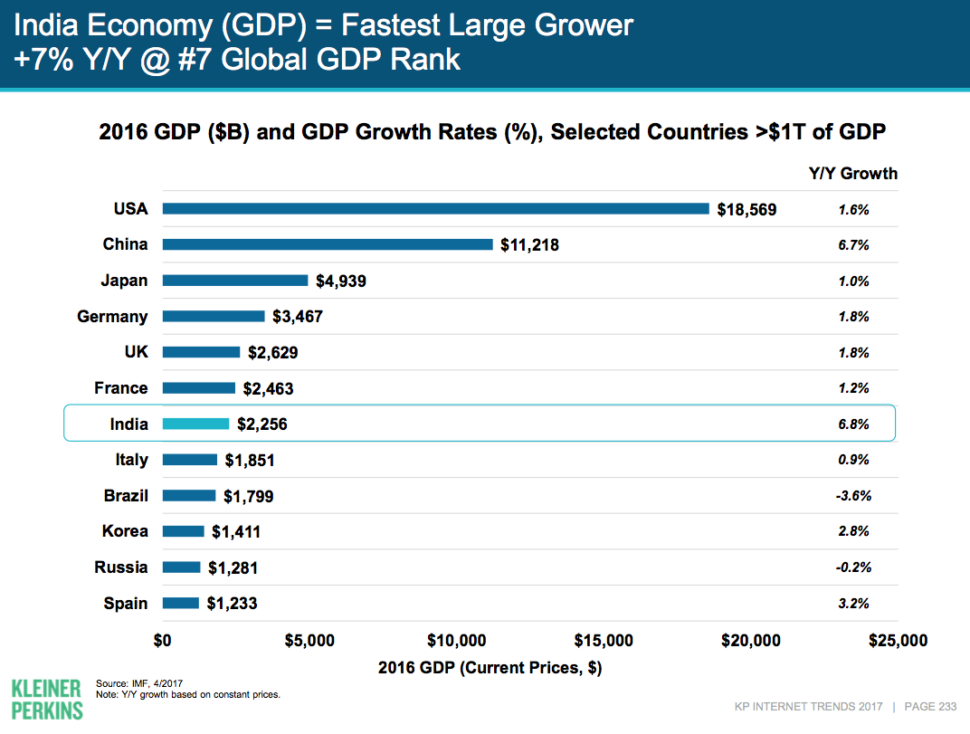
AOL has just gone live with its India Web portal as the company seeks to grab a growing slice of this rapidly growing market.

Says Ron Grant, AOL president and COO, “This is a very important — I would say critical — market for us. India has the highest priority in our international business.”

AOL already has a customer service center in India and roughly 2,000 employees.

MSN, Yahoo! and Google already offer localized sites for India, and local players such as Rediff and Sify are well established.

But I wouldn’t say that AOL is late to the party.

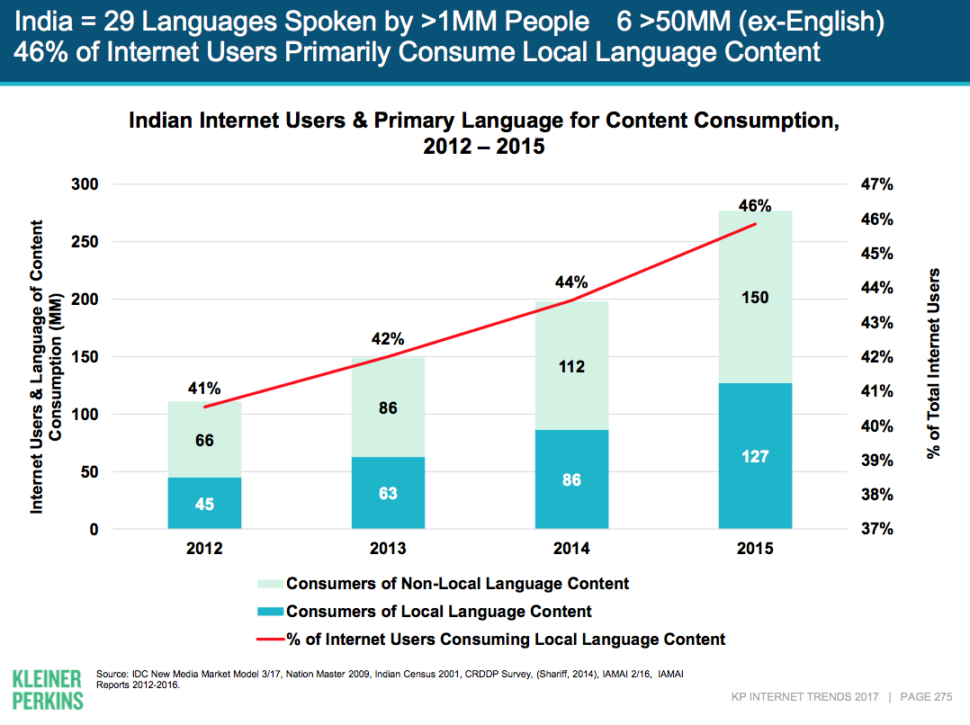
Depending on how you measure Internet penetration (particularly cyber cafes), India has between 20 and 50 million Internet users. This is a lot of people, but in a country of 1.1 billion, it’s really not that many at all.

This party is just getting started.